The United States is Like a Serial Killer With Diplomacy
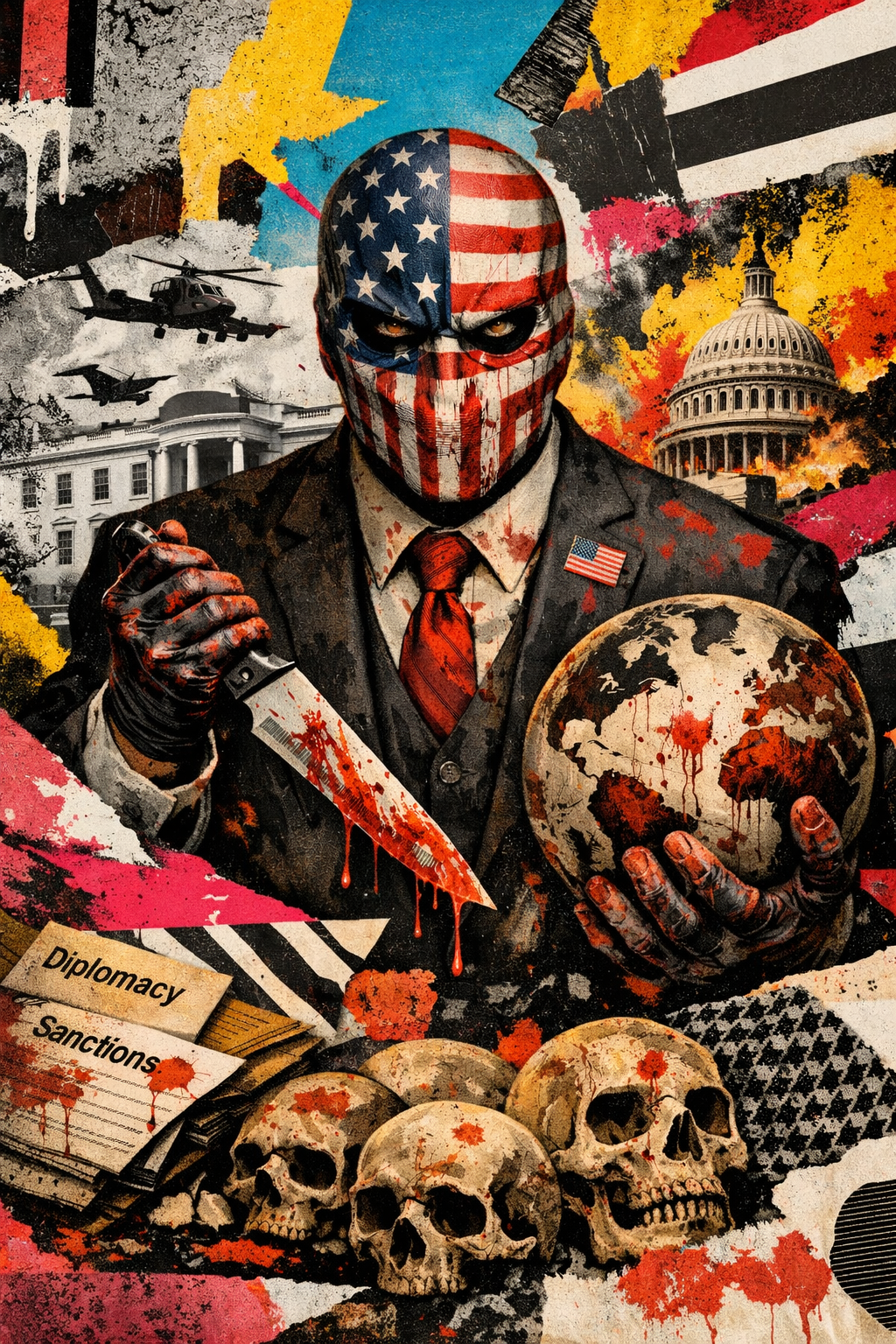
Nations rarely see themselves as villains. They tell stories of heroism, necessity, and destiny. Yet from the perspective of many outside its borders, the United States often appears less like a benevolent guardian of global order and more like a calculating force that uses diplomacy the way a serial killer uses charm—carefully, strategically, and only until it’s time to strike.
The analogy may sound harsh, but it captures a recurring pattern in American foreign policy. Publicly, the United States speaks the language of cooperation, freedom, and international stability. Privately—and sometimes openly—it pursues a doctrine summarized in two words: America First.
Like a serial killer who blends into society, the United States operates within the institutions of the global system while bending them to its advantage. It negotiates treaties, attends summits, and speaks of alliances. Yet when those alliances no longer serve its interests, they can be discarded quickly. Diplomacy becomes less about partnership and more about positioning.
Throughout modern history, American power has been enforced not just through speeches and sanctions but through bombs, covert operations, and military interventions. Governments have been toppled, wars launched, and entire regions destabilized in the name of protecting American interests or preserving its geopolitical dominance.
From Southeast Asia to the Middle East, the pattern is recognizable:
1. Identify a threat to American influence.
2. Frame the conflict as a moral battle—democracy versus tyranny, freedom versus terror.
3. Deploy economic pressure, intelligence operations, or military force.
4. Leave behind a region struggling to rebuild while Washington moves on to the next crisis.
To critics, this resembles the psychology of a predator. A serial killer often rationalizes their actions, convincing themselves that their behavior is justified or necessary. Similarly, American leaders frequently frame intervention as unavoidable—something done reluctantly but responsibly.
Yet the body count of modern geopolitics is not metaphorical. Wars and proxy conflicts linked to great-power competition have resulted in millions of deaths over decades. While the United States is not the only nation responsible for global violence, its unmatched military reach means its decisions carry enormous consequences.
The contradiction lies in the nation’s identity. The United States genuinely sees itself as a defender of liberty and democracy. Many of its citizens believe their country plays a positive role in the world. But the exercise of empire rarely looks noble from the outside.
This is where the serial killer metaphor becomes provocative but useful. A serial killer often lives a double life—one face for neighbors, another for victims. America’s global posture can appear similar: a champion of freedom domestically, a ruthless strategist internationally.
None of this means the United States is uniquely evil or that other great powers behave differently when given the chance. History suggests the opposite. Powerful states almost always pursue their interests aggressively. What makes America different is the scale of its power and the moral narrative that accompanies it.
If the United States wants to escape the metaphor, the challenge is not simply changing rhetoric but changing behavior. Diplomacy would need to become genuine partnership rather than a prelude to coercion. Military force would have to become the last resort instead of a frequent instrument of policy.
Until then, many around the world will continue to view American diplomacy not as the language of peace, but as the calm voice that speaks just before the knife appears.